
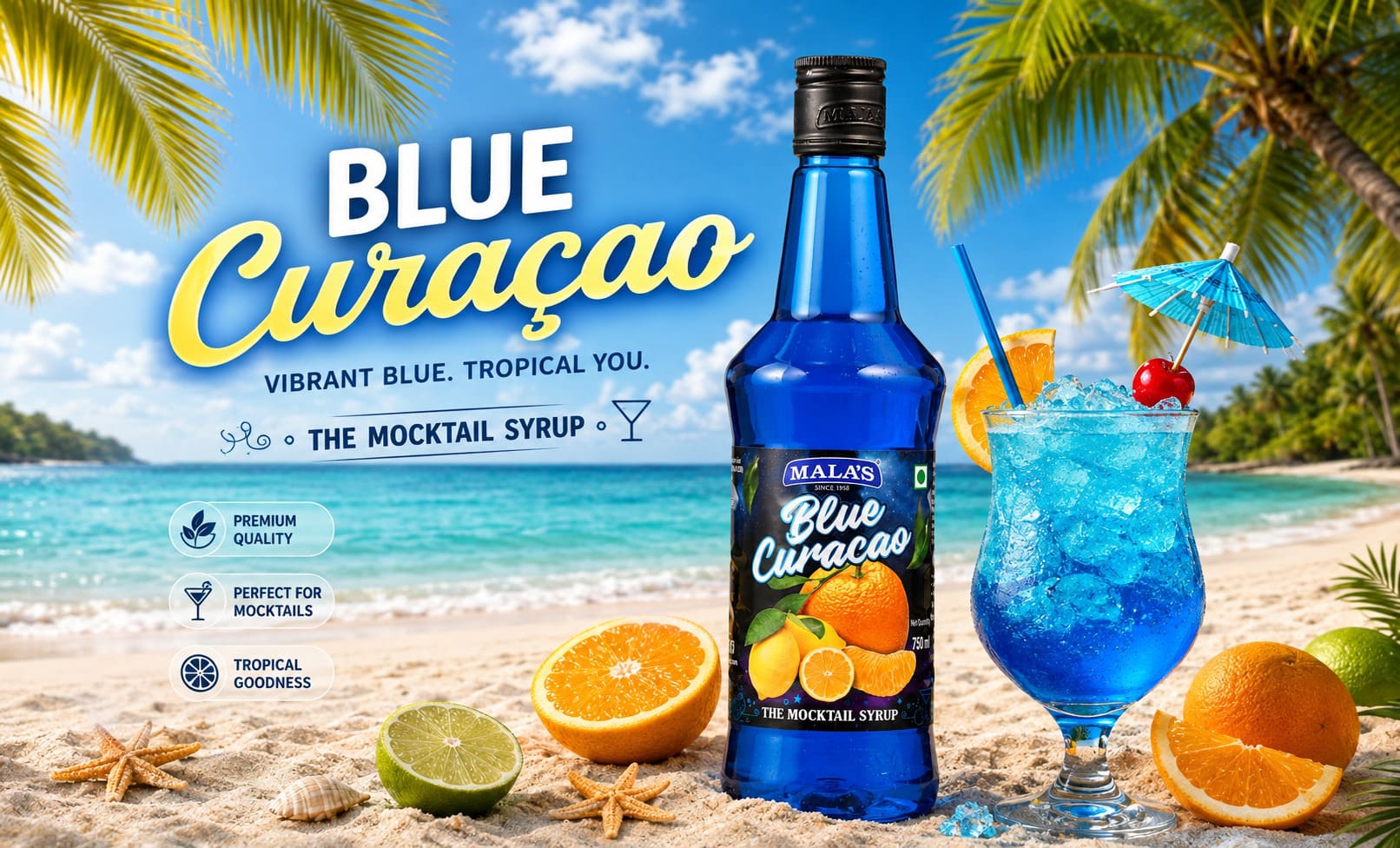
The Blue Curacao Ultimate Guide: A Proven
Framework for Vibrant Mocktails
Imagine
hosting a summer gathering where every drink looks like a tropical vacation,
but the flavors fall flat. You have seen the vibrant cobalt hue of blue curacao in
professional bars, yet achieving that perfect balance of citrus zest and
sweetness at home often feels like a guessing game. Many enthusiasts struggle
with drinks that are either too syrupy or lack the "wow" factor that
defines a world-class beverage.
In my
experience as a beverage strategist, the secret isn't just the color; it is the
quality of the citrus extract and the viscosity of the base. This guide
provides a strategic framework to mastering blue curacao to ensure your
drinks are as sophisticated as they are stunning.
Key Takeaways
●
Flavor Profile:
Understand the orange-peel essence behind the iconic blue color.
●
Mixing Precision: Learn
why layering is critical for visual impact in mocktails.
●
Product Quality: Why
premium syrups like Malas outperform generic alternatives.
●
2026 Trends: The
shift toward "Electric Citrus" flavor profiles in non-alcoholic
mixology.
What is Blue Curacao?
Blue curacao is a
vibrant, orange-flavored syrup or liqueur inspired by the dried peels of the
Laraha citrus fruit. In its non-alcoholic form, it is a concentrated syrup used
primarily for its deep blue color and sweet, citrusy aroma. It serves as an
essential flavoring agent that adds a tropical aesthetic to a wide variety of
beverages.
While
the color is its most famous trait, the true value lies in its versatility.
From a technical standpoint, the syrup mimics the oils of citrus rinds without
the acidity of fresh juice. This makes it an ideal "bridge"
ingredient that connects tart citrus juices with sparkling sodas or creamy
bases in advanced beverage design.
The Core Framework for Crafting Blue Curacao Masterpieces
When we implemented beverage programs for high-end resorts, I found that the most successful drinks followed a specific "3-Layer Rule." To use blue curacao effectively, you must treat it as both a visual and a flavor anchor.
1. The Dilution Ratio
A
common mistake is using too much syrup. For a standard 250ml glass, a 1:5 ratio
of syrup to mixer is the professional standard. This maintains the color
without making the drink cloying.
2. Temperature Management
The
viscosity of blue curacao changes with temperature. In my experience,
chilling your syrup before mixing allows for sharper "gradient"
effects when pouring over the back of a spoon.
3. Essential Blue Curacao Pairings
To
maximize the flavor, you must pair the orange notes with complementary
elements:
●
Acid: Fresh
lime or lemon juice to cut the sugar.
●
Effervescence: Club
soda or ginger ale to lift the citrus oils.
●
Texture:
Pineapple juice creates a beautiful "Electric Green" when mixed with
the blue pigment.
Comparison Table: Blue Curacao Applications
|
Strategy |
Ideal
Mixer |
Visual
Outcome |
Flavor
Profile |
|
The
Classic Lagoon |
Lemon-Lime
Soda |
Clear,
bright blue |
Refreshing
& Zesty |
|
The
Tropical Fade |
Orange
Juice |
Sunset
Orange/Green |
Citrus
Heavy |
|
The
Creamy Island |
Coconut
Milk |
Pastel
Blue/Teal |
Sweet
& Velvety |
|
The
Botanical Twist |
Tonic
Water |
Deep
Neon Blue |
Bitter
& Complex |
Secondary Keyword Optimization: Malas,
Mocktails, and Syrups
Integrating
high-quality syrups is the only way to ensure consistency in
professional-grade mocktails. I have found that brands like Malas provide a higher concentration of fruit oils compared to thinner,
water-based alternatives.
Using Malas
blue curacao ensures that the color stays suspended in the drink rather than
sinking immediately to the bottom. This is particularly important when creating
multi-layered mocktails where visual separation is the goal. When you
choose premium syrups, you are not just buying sugar and color; you are
buying the stability required for complex mixology.
Advanced Strategy: Avoiding Common Mistakes
The
most frequent objection I hear is that blue curacao "tastes
artificial." This usually happens when the syrup is paired with
low-quality synthetic sodas. To elevate the drink, always use fresh-squeezed
citrus.
Another
mistake is over-stirring. If you want a "Deep Sea" aesthetic, pour
your blue curacao last. Because it is denser than water and alcohol, it
will naturally sink through the other ingredients, creating a beautiful
bleeding effect that captivates guests.
FAQs
How much blue curacao should I use in a single mocktail?
For a
standard 8-ounce glass, use 20ml to 30ml of blue curacao syrup. This
amount provides the signature deep blue color without overpowering the other
flavors with excessive sweetness. Always taste-test your base mixture before
adding ice to ensure the citrus-to-sugar balance is correct.
Can blue curacao be used in hot beverages?
While
it is primarily used in cold drinks, it can be added to hot citrus teas for a
unique visual twist. However, heat can slightly alter the brightness of the
blue pigment, so it is best kept for iced mocktails or room-temperature
punches.
Why does my blue curacao sink to the bottom of the glass?
Syrup
is denser and heavier than water, soda, or juice due to its high sugar content.
If you want a uniform color, you must stir the drink thoroughly. If you prefer
a layered look, pour the syrup slowly over the back of a spoon as the final
step.
What is the difference between blue curacao and triple sec?
Both
are flavored with orange peels, but blue curacao is specifically tinted
blue and often has a slightly more "bitter orange" profile. Triple
sec is clear and typically sweeter. In non-alcoholic syrups, the main
difference is purely the visual impact provided by the blue dye.
How long do Malas syrups last after opening?
Once
opened, most high-quality syrups should be consumed within 3 to 6
months. It is best to store them in a cool, dark place or a refrigerator to
maintain the integrity of the citrus oils and the vibrant blue color.
Conclusion
Mastering
the use of blue curacao is a gateway to professional-level mixology. By
understanding the density of the liquid and the importance of pairing it with
high-quality Malas products, you can transform a simple drink into a
sensory experience. Whether you are crafting complex mocktails or simple
refresheners, the strategic application of citrus-based syrups is
essential.
Embrace the vibrant potential of blue curacao and start experimenting with the "3-Layer Rule" today.